There are no items in your cart
Add More
Add More
| Item Details | Price | ||
|---|---|---|---|

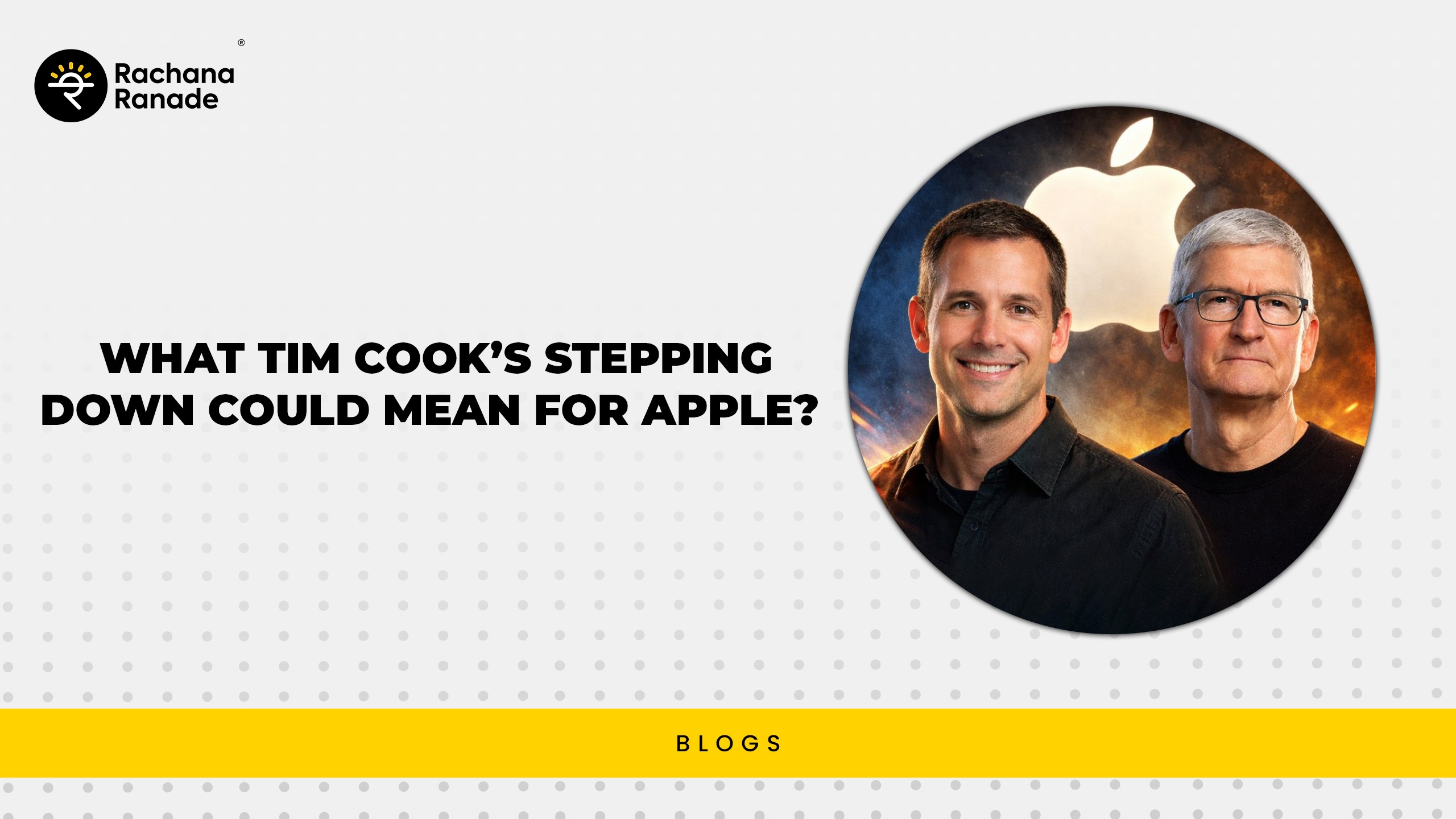
Tim Cook has brought his long run as Apple CEO to a close with what he described as a carefully planned succession.
Introduction
Tim Cook joined Apple in 1998 and became CEO in 2011 after succeeding Steve Jobs. Since then, he has overseen the introduction of products and services, including Apple Watch, AirPods, Apple Vision Pro, iCloud, Apple Pay, Apple TV+, and Apple Music.
For years, Cook has been the steady hand behind Apple’s global success. Many initially doubted whether he could maintain the company’s dominance after Steve Jobs, but over the last decade, he transformed Apple into one of the world’s most valuable companies.
Apple has confirmed that John Ternus, currently the company’s hardware chief, will become CEO on September 1, while Cook will remain involved as Executive Chairman.
Why Is Tim Cook Stepping Down as CEO?
Speaking at an all-hands meeting in the Steve Jobs Theater, Cook reportedly said that three major conditions had finally aligned.
1) Apple’s Business Is at a Position of Strength
Cook believes this is the right time to step down because Apple is financially and operationally stronger than ever. Under his leadership, Apple evolved from a company heavily dependent on the iPhone into a massive ecosystem business.
Today, Apple generates revenue not only from hardware, but also from services such as the App Store, iCloud, Apple Music, and Apple TV+, along with wearables like Apple Watch and AirPods. The company also strengthened its ecosystem through subscription services and Apple Silicon chips.
Apple remains one of the world’s most profitable companies with enormous cash reserves, strong free cash flow, and one of the most loyal customer bases globally.
2) A Well-Filled Product Pipeline
Another major reason behind Cook’s decision is Apple’s future product roadmap. He reportedly described Apple’s pipeline as “incredible,” suggesting confidence in the company’s long-term growth.
Several projects are already being developed internally, including advancements in spatial computing, AI integration, and next-generation devices. However, Apple has also faced criticism for moving slower in artificial intelligence compared to competitors like Microsoft and Google, both of which are aggressively integrating AI into their ecosystems.
Even so, Apple’s future no longer depends on a single product launch. Cook appears confident that the company already has multiple growth drivers lined up for the next decade.
3) John Ternus Is Ready to Take Over
John Ternus has emerged as the strongest successor candidate. He currently leads Apple’s hardware engineering division and has played a major role in products such as the iPhone, Mac, iPad, and Apple Silicon devices.
Cook likely sees Ternus as someone capable of balancing innovation, operational discipline, and Apple’s design-focused culture. Reports also suggest Cook wanted what he called a “textbook succession plan,” ensuring a smooth leadership transition without disrupting the company’s long-term direction.
The AI Challenge Ahead
While Apple remains financially dominant, the company faces increasing pressure in artificial intelligence. Many analysts believe Apple entered the AI race later than competitors, especially after the rapid rise of tools like ChatGPT and Gemini.
This means the next phase of Apple’s leadership may not just be about maintaining profitability, but also proving that Apple can still lead the future of innovation.
Conclusion
Tim Cook’s departure marks the end of one of the most successful leadership eras in Apple’s history. Under his leadership, Apple evolved from a hardware-focused company into a global technology ecosystem powered by services, wearables, and innovation.
His decision to step down appears strategic rather than sudden. Apple remains financially strong, its future product pipeline is already in development, and John Ternus represents continuity within the company’s culture and vision.
However, the next chapter for Apple will likely be defined by artificial intelligence and the company’s ability to continue shaping the future of technology in an increasingly competitive industry.